Is Strength Training Safe During Pregnancy? A Complete Guide for Women in Dubai
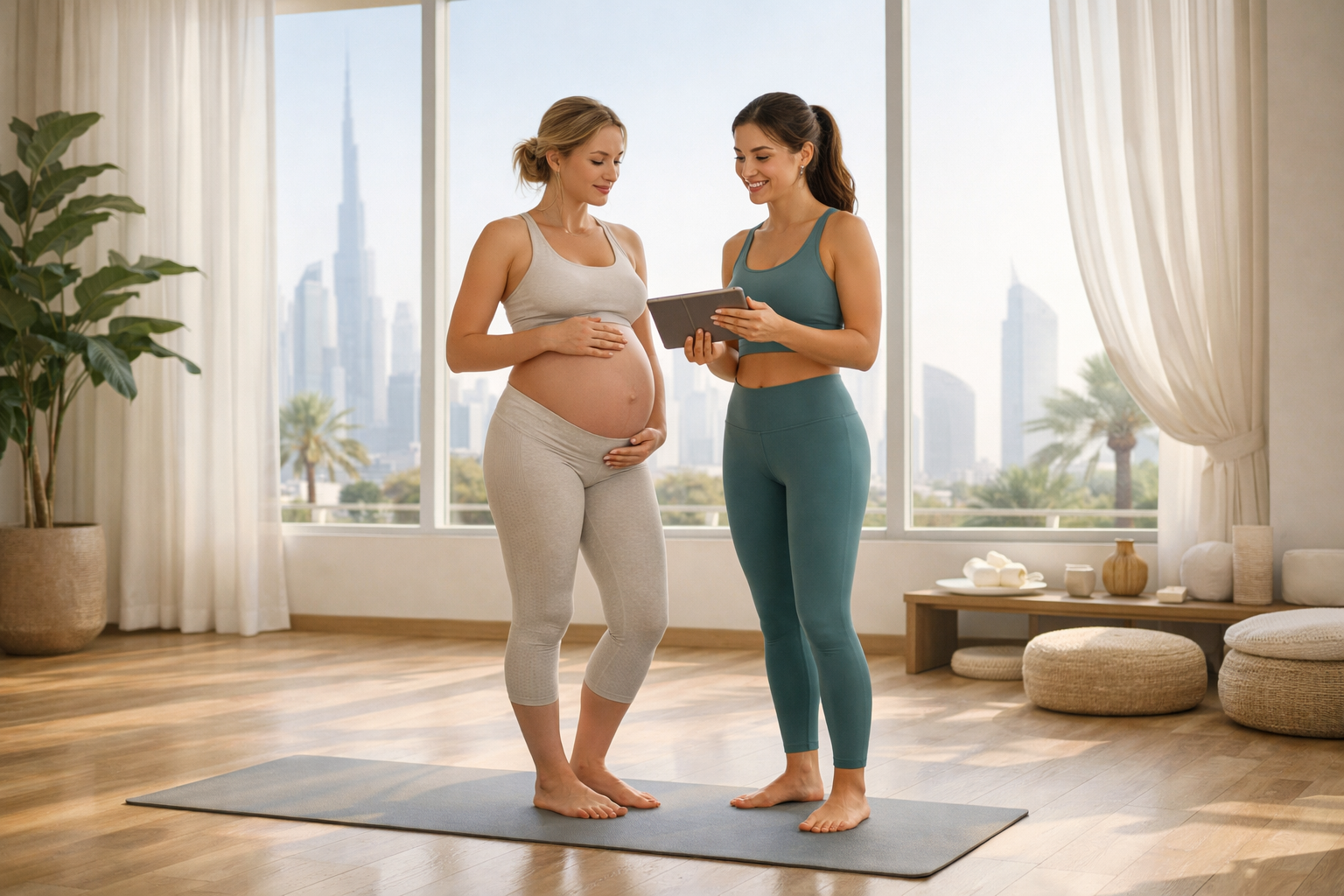
Pregnancy is one of the most transformative phases in a woman’s life. Physically. Emotionally. Mentally.
And one of the most common questions I hear from women in Dubai is:
“Is it safe to continue strength training during pregnancy?”
The short answer is:
Yes — when done correctly and safely.
But the longer answer requires understanding your body, your trimester, and how movement should evolve during pregnancy.
This guide will walk you through what is safe, what to avoid, and how to approach strength training during pregnancy with confidence and clarity.
Why Strength Training During Pregnancy Matters
Pregnancy is not a time to stop moving entirely — it’s a time to move intentionally.
Research consistently shows that safe exercise during pregnancy can:
- Reduce lower back pain
- Improve posture
- Support pelvic floor function
- Improve circulation
- Reduce pregnancy-related discomfort
- Help regulate weight gain
- Improve mood and energy
- Support easier postpartum recovery
For many women in Dubai who are used to active lifestyles, completely stopping training can actually feel more stressful than continuing safely.
The key is adaptation — not elimination.
Is Strength Training Safe in All Trimesters?
In most uncomplicated pregnancies, yes — with modifications.
However, the approach should change as your body changes.
First Trimester
During the first trimester, fatigue and nausea can be significant.
Focus on:
- Moderate intensity
- Proper breathing
- Avoiding overheating
- Listening closely to energy levels
This is not the time to chase personal records.
Second Trimester
Often called the “energy trimester,” many women feel stronger here.
However:
- Your center of gravity begins to shift
- Ligaments become more relaxed (due to relaxin hormone)
- Balance becomes more important
Stability and controlled movement become priorities.
Third Trimester
As the belly grows:
- Balance shifts significantly
- Core pressure increases
- Breath control becomes critical
Strength training becomes more about:
- Maintaining mobility
- Supporting posture
- Reducing strain
- Preparing for labor and recovery
Intensity decreases — intention increases.
What Makes Strength Training Safe During Pregnancy?
Safety isn’t about avoiding strength training.
It’s about understanding five key principles:
1. Proper Breathing and Core Awareness
One of the most important adjustments is learning how to manage intra-abdominal pressure.
This means:
- No breath-holding (avoid Valsalva maneuver)
- Coordinating breath with movement
- Avoiding excessive core strain
Core awareness during pregnancy protects:
- The pelvic floor
- The abdominal wall
- The lower back
2. Avoiding Supine Positions (After First Trimester)
After the first trimester, prolonged exercises lying flat on your back may reduce blood flow.
Modifications can include:
- Inclined positions
- Side-lying alternatives
- Seated or standing variations
3. Controlled Range of Motion
Hormonal changes increase ligament laxity. This means:
- Avoid overstretching
- Avoid extreme mobility work
- Focus on stability and strength
More flexibility is not always better during pregnancy.
4. Monitoring Intensity
You should be able to:
- Hold a conversation
- Avoid feeling dizzy
- Avoid sharp pain
- Recover quickly after sets
Pregnancy is not the time for high-intensity conditioning or aggressive lifting.
5. Individual Medical Clearance
Every pregnancy is unique.
Women experiencing:
- Placenta previa
- Pre-eclampsia
- Severe pelvic pain
- High-risk pregnancy markers
Should always consult their doctor before continuing exercise.
Common Exercises That Are Generally Safe
With proper form and supervision, many exercises remain appropriate:
- Goblet squats
- Supported lunges
- Dumbbell rows
- Resistance band work
- Glute bridges
- Seated shoulder presses
- Farmer carries
- Controlled deadlifts
The difference lies in:
- Load adjustment
- Tempo control
- Breathing technique
- Rest intervals
Exercises to Modify or Avoid
During pregnancy, avoid:
- High-impact jumping
- Contact sports
- Heavy max lifts
- Deep twisting movements
- Intense abdominal crunching
- Overhead heavy barbell lifts without support
Again, this doesn’t mean “stop training.”
It means train smarter.
Strength Training and Pelvic Floor Health
One of the biggest myths is that strength training damages the pelvic floor.
When coached correctly, it can actually support it.
The key is:
- Proper breathing
- Controlled tempo
- Avoiding excessive intra-abdominal pressure
- Learning how to engage and relax the pelvic floor
Pelvic floor awareness during pregnancy significantly improves postpartum recovery outcomes.
Mental Benefits of Staying Strong During Pregnancy
Beyond physical benefits, strength training supports:
- Confidence
- Reduced anxiety
- Body trust
- Emotional regulation
- Sense of control
Pregnancy can feel unpredictable.
Movement restores agency.
For many women in Dubai navigating busy professional lives, staying active provides grounding and stability.
Why Professional Guidance Matters
Online workouts cannot assess:
- Your posture
- Your core response
- Your breathing mechanics
- Your pelvic floor engagement
- Your movement compensations
This is why working with a prenatal-certified coach in Dubai ensures:
- Exercises are adapted daily
- Modifications happen in real time
- Your safety is prioritized
- You are never pushed beyond comfort
Pregnancy strength training is not about intensity.
It is about precision.
Final Thoughts
Strength training during pregnancy is not only safe for most women — it can be one of the most empowering things you do for your body.
The key is not pushing harder.
The key is moving smarter.
Your body is changing.
Your training should evolve with it.
Here’s what to do next
If you’re currently pregnant and unsure how to train safely, I’d be happy to talk through your stage, concerns, and goals.
No pressure. Just clarity and support.
Frequently Asked Questions
Can I continue lifting weights if I was lifting before pregnancy?
Yes — with modifications and reduced intensity.
Can I start strength training if I wasn’t active before?
Yes, but under supervision and with gradual progression.
Is it safe to exercise every day?
Low to moderate activity daily is often safe, but strength training 2–4 times weekly is generally ideal.
Should I stop if I feel tired?
Yes. Fatigue is feedback.
Mercy Waithira Mwangi
Certified Women's Health & Fitness Specialist · Dubai
Mercy is a certified women's health and fitness specialist based in Dubai, with expertise in prenatal and postpartum training, strength coaching, injury-aware programming, and hormonal health. She has coached over 1,000 women, helping them build strength, confidence, and resilience at every stage of life.
Want personalized advice?
Every body is different. Book a free consultation for guidance tailored to yours.
Book a Free Consultation