Training with Back Pain: How to Move Safely and Build Strength

Back pain is one of the most common reasons women tell me they've stopped exercising — or never started in the first place. The logic seems sound: something hurts, so you stop using it. But for the vast majority of back pain presentations, that instinct is actually counterproductive.
The evidence on lower back pain is unambiguous: for most people, appropriate movement and progressive strength training is more effective for reducing pain and preventing recurrence than rest, avoidance, or passive treatments alone. The key word, again, is appropriate.
Understanding Why Back Pain Happens
Before we talk about training, it helps to understand what's usually happening. The majority of lower back pain (roughly 85–90%) is classified as 'non-specific' — meaning it's not caused by a structural issue like a herniated disc or nerve compression, but rather by a combination of muscle imbalance, poor movement patterns, sedentary behaviour, stress, and deconditioning.
The spine is not fragile. It's a robust, well-engineered structure capable of enormous load — when the surrounding musculature is strong and the movement patterns that load it are sound. Most back pain is a signal that the system needs attention, not that it's broken.
I tell my clients: your back doesn't hurt because you've been moving too much. It hurts because the right muscles haven't been strong enough, for long enough.
The Most Common Culprits
Weak Glutes
The gluteus maximus is the largest muscle in the body and the primary driver of hip extension. When the glutes are weak or underactive — common in women who sit for long periods — the lower back compensates, taking on load it wasn't designed to handle repeatedly. Strengthening the glutes is one of the most reliable ways to reduce lower back pain.
Poor Hip Hinge Mechanics
How you bend to pick something up — a weight in the gym or a bag of groceries — matters enormously over thousands of repetitions. A poor hip hinge, where the back rounds and the load is taken through the lumbar spine rather than the hips and hamstrings, is a primary driver of disc and muscle injury. Learning to hinge well is foundational.
Tight Hip Flexors
Sitting for extended periods shortens the hip flexors — the muscles at the front of the hip that connect to the lumbar spine. Tight hip flexors tilt the pelvis forward, increase lumbar lordosis, and create chronic tension in the lower back. Regular hip flexor stretching and targeted glute work address this pattern directly.
How to Train Safely with Back Pain
The goal is not to avoid loading the spine — it's to load it appropriately, in positions that are currently tolerable, while building the strength and movement quality that allows you to do more over time.
Start with Pain-Free Positions
Identify which positions and movements are currently comfortable. Many people with back pain can perform exercises lying on their back or side, or in a quadruped (hands and knees) position, even when standing and hinging are uncomfortable. Begin there.
Prioritise These Movements
Glute bridges and hip thrusts: build posterior chain strength with minimal spinal load. Bird dogs: train core stability and anti-rotation without flexion. Dead bugs: develop deep core activation and lumbar spine control. Side-lying clamshells and band walks: target the glute medius, which stabilises the pelvis. Pallof press: train core anti-rotation, essential for spinal protection.
Reintroduce Hinges and Squats Gradually
Romanian deadlifts with light weight, performed with excellent technique, are often well-tolerated even with back sensitivity — and they directly address the posterior chain weakness that drives many back pain presentations. Progress slowly and be guided by pain response, not by any predetermined timeline.
What to Avoid in the Early Stages
Loaded spinal flexion under fatigue — this means avoiding heavy bent-over rows or deadlifts until your movement quality is solid. High-impact activity before building foundational stability. Sitting for hours without breaks — movement snacks throughout the day matter.
A Note on Working with a Coach
Training with back pain without guidance is possible, but it carries real risk — particularly because the movements that help and the movements that harm can look very similar to someone without a trained eye. A coach who understands the spine, can observe your movement patterns, and can progress your training appropriately makes the process both safer and faster.
I've worked with many women who came to me convinced their back pain meant they could never train properly. Every single one of them is stronger now — and experiencing less pain — than when we started. If that sounds like something you'd like, I'd love to talk.
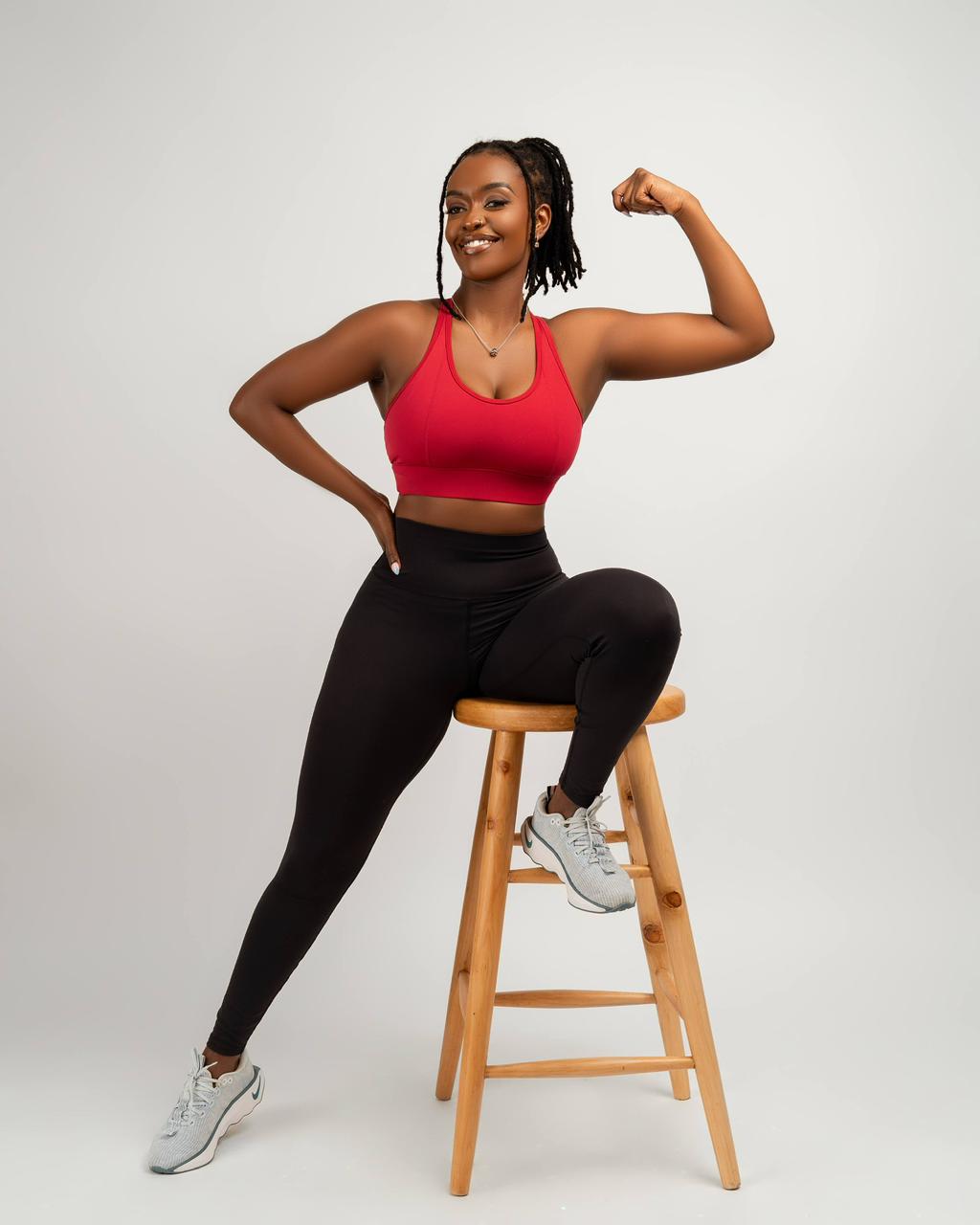
Mercy Waithira Mwangi
Certified Women's Health & Fitness Specialist · Dubai
Mercy is a certified women's health and fitness specialist based in Dubai, with expertise in prenatal and postpartum training, strength coaching, injury-aware programming, and hormonal health. She has coached over 1,000 women, helping them build strength, confidence, and resilience at every stage of life.
Want personalized advice?
Every body is different. Book a free consultation for guidance tailored to yours.
Book a Free Consultation